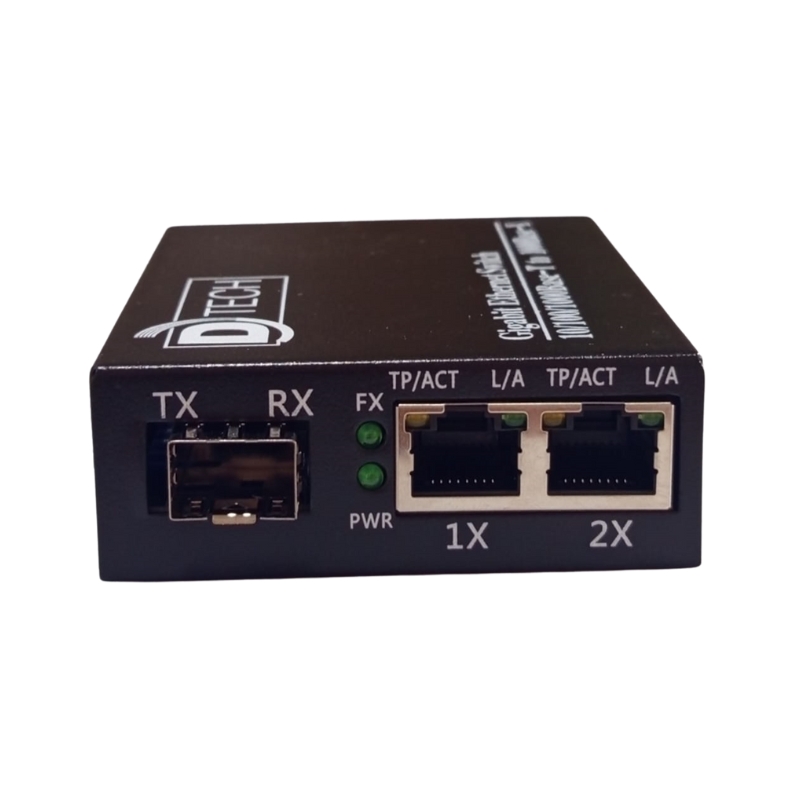
What is a media converter?
A media converter, also known as a fiber optic media converter, is a network device that connects two different types of media, such as twisted pair and fiber optic cabling. It extends the network's transmission distance by converting data signals from electrical signals (copper) to optical signals (fiber optics) without causing signal degradation. Such devices play a vital role in modern networks, ensuring compatibility and integration between traditional cabling systems and newer high-speed fiber optic technologies. Available in a variety of form factors and supporting different data transmission rates, they are versatile tools for expanding and maintaining network infrastructure.
The Benefits of Media Converters
Extend Communication Distance
Media converters can significantly extend the reach of a network by converting electrical signals over copper cables to optical signals for fiber-optic cables, which can carry data much farther without losing signal quality.
Cost-effective
Media converters facilitate the integration of different network types and technologies, enabling a seamless migration from traditional copper networks to the new technology of fiber optic networks, so you can continue to use your existing cabling infrastructure while expanding or upgrading your network without a complete overhaul.
Enhanced Security
Fiber optic connections are less susceptible to electromagnetic interference (EMI) and eavesdropping than copper, so using a media converter to convert to a fiber optic network improves overall security.
Flexibility and Scalability
Fiber media converters are versatile devices that can be used to connect different types of network media, such as copper to fiber, multimode to single-mode, or one type of fiber to another. In addition, media converters are compact and easy to deploy, so you can quickly add new devices to expand your network!
Types of Media Converters
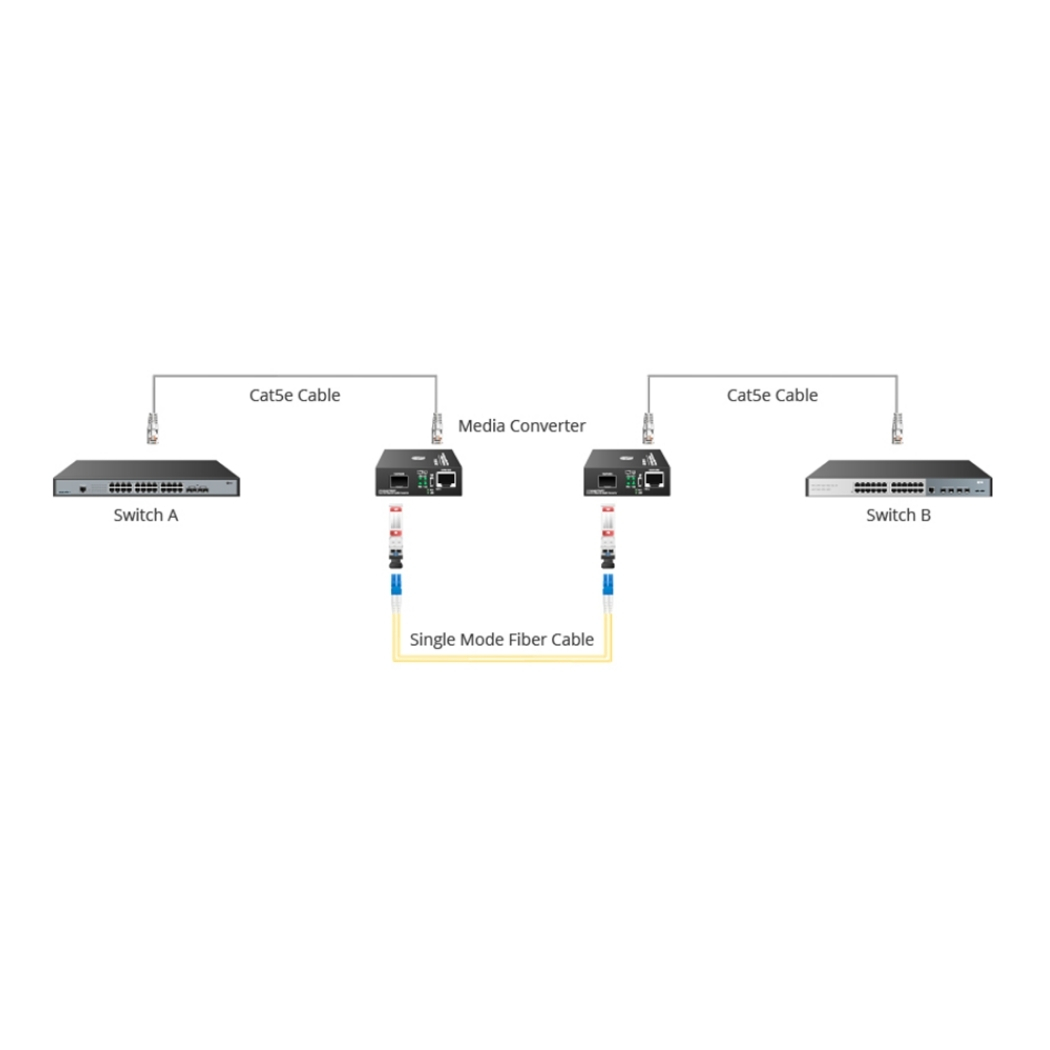
Copper to Fiber Media Converter
Copper to fiber media converters enable connections of copper-based Ethernet devices over extended distances via a fiber optic link, which protects data from noise and interference and future-proofs a network with additional bandwidth capacity. Copper to fiber media converter includes Ethernet ones providing connectivity for Ethernet, Fast Ethernet, Gigabit, and 10 Gigabit Ethernet devices, ideal for point-to-point connections.
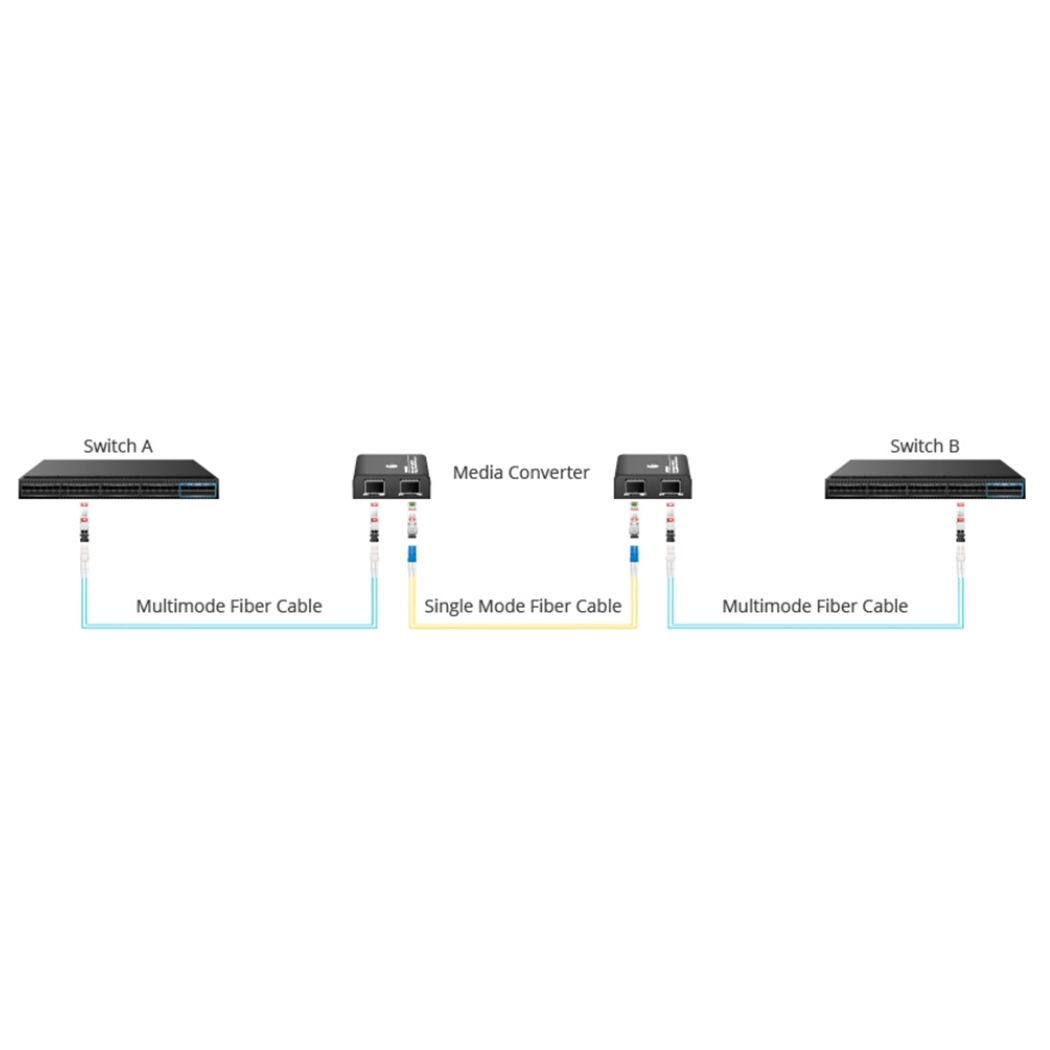
Fiber to Fiber Media Converter
Fiber to fiber media converters connect different fiber optic networks and support conversion from one wavelength to another. They provide connections between multimode and single-mode fibers, as well as between dual-fiber and single-fiber cables.
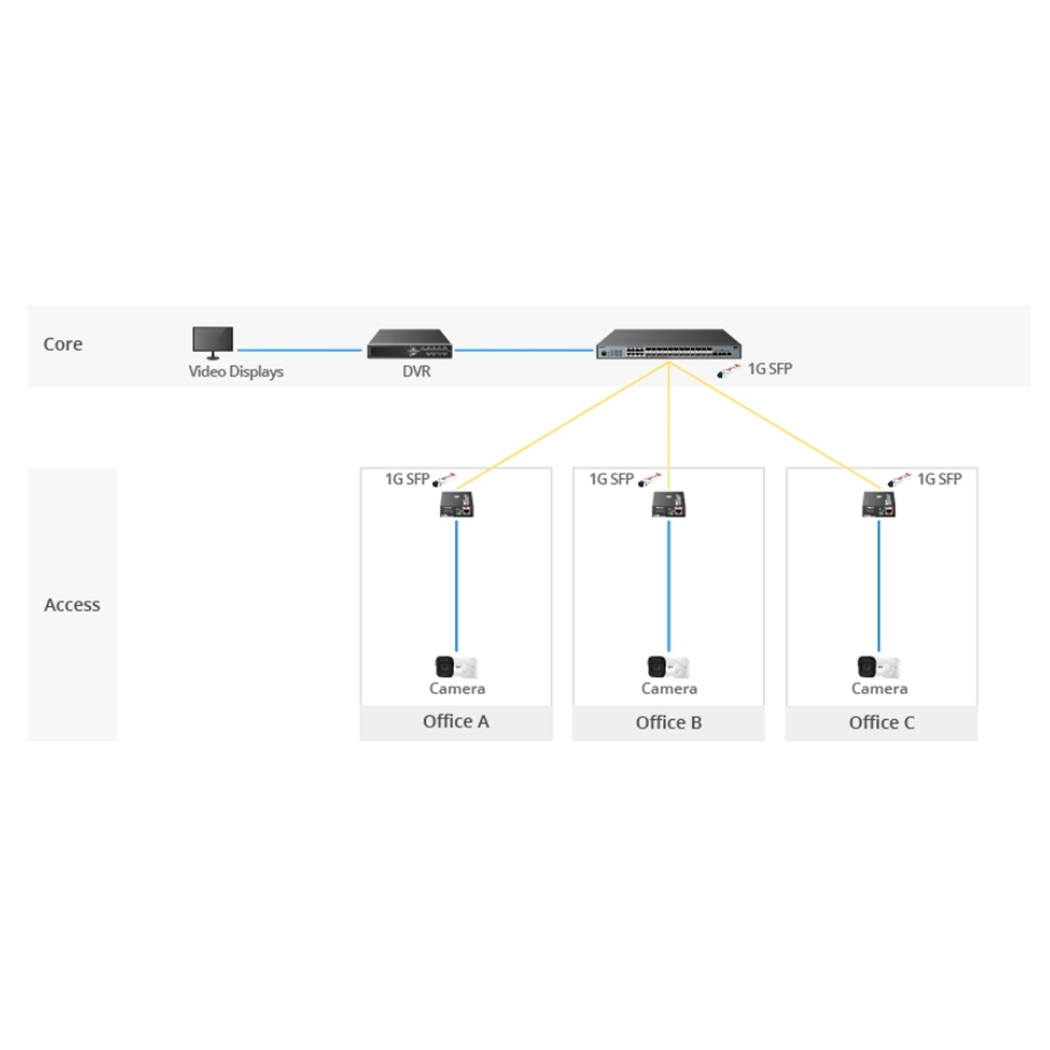
PoE Media Converter
PoE media converters achieve reliable and cost-effective fiber distance extension for PoE-powered devices, providing power to network devices over the same copper cable used for data. It can power devices like IP phones, video conferencing equipment, IP cameras and WiFi devices over copper cabling. Thus, it is widely used for connecting security cameras and wireless access points in some inaccessible areas to Gigabit backbone.
When choosing a media converter for your network, you should consider factors such as the type of network media you need to connect to, the distance between devices, the bandwidth and speed required, and more. It is better to consider the future network requirements before choosing suitable media converters.